
What I've Learned About Love
It breathes.

Before we begin, I suggest playing the song Ophelia by the Lumeneers on low in the background. The first reason will make sense right away but the second will take a little time for most.
I want to share with you what I've discovered about Love.
Not what I've read about it and not what I think about it, rather what I've learned about it from experiencing its many fluid forms — in my own life with all of its ups, downs and sideway in-betweens.
Last night I watched the film, The Theory of Everything (2014) about the life of Dr. Stephen Hawking. Despite his physical limitations and hardships, I had no idea the extent of love present in that man's life — it's simply remarkable. He was a very fortunate man to have experienced that degree of selfless love.
Love changes.
And I don't mean love changes us, because it does, and while that's true too, that's not what I am talking about here. But it is a powerful experience — when love changes us.
We tend to think of most things as static, but the truth is they're dynamic, and love is no exception.
There are many different types of love, and you, like me, have probably experienced most of them — if you're living in true authenticity, humility and abiding in heart.
Greek Flavors of Love
We only have one word for all existing forms of love today in the English (American) culture. However, there is no single word in Ancient Greek that captures all the types of love the way we might try to use “love” in English.
The Ancient Greeks had many words to describe specific types of love — just like the Japanese have several words to describe different types of rain and the Eskimo have many words to describe various types of snow.
So the Ancient Greeks had it for the experience of love. They named them but they didn't invent or create them. They merely ascribed a name to certain types of love they identified based on specific observable attributes — both healthy and neurotic.
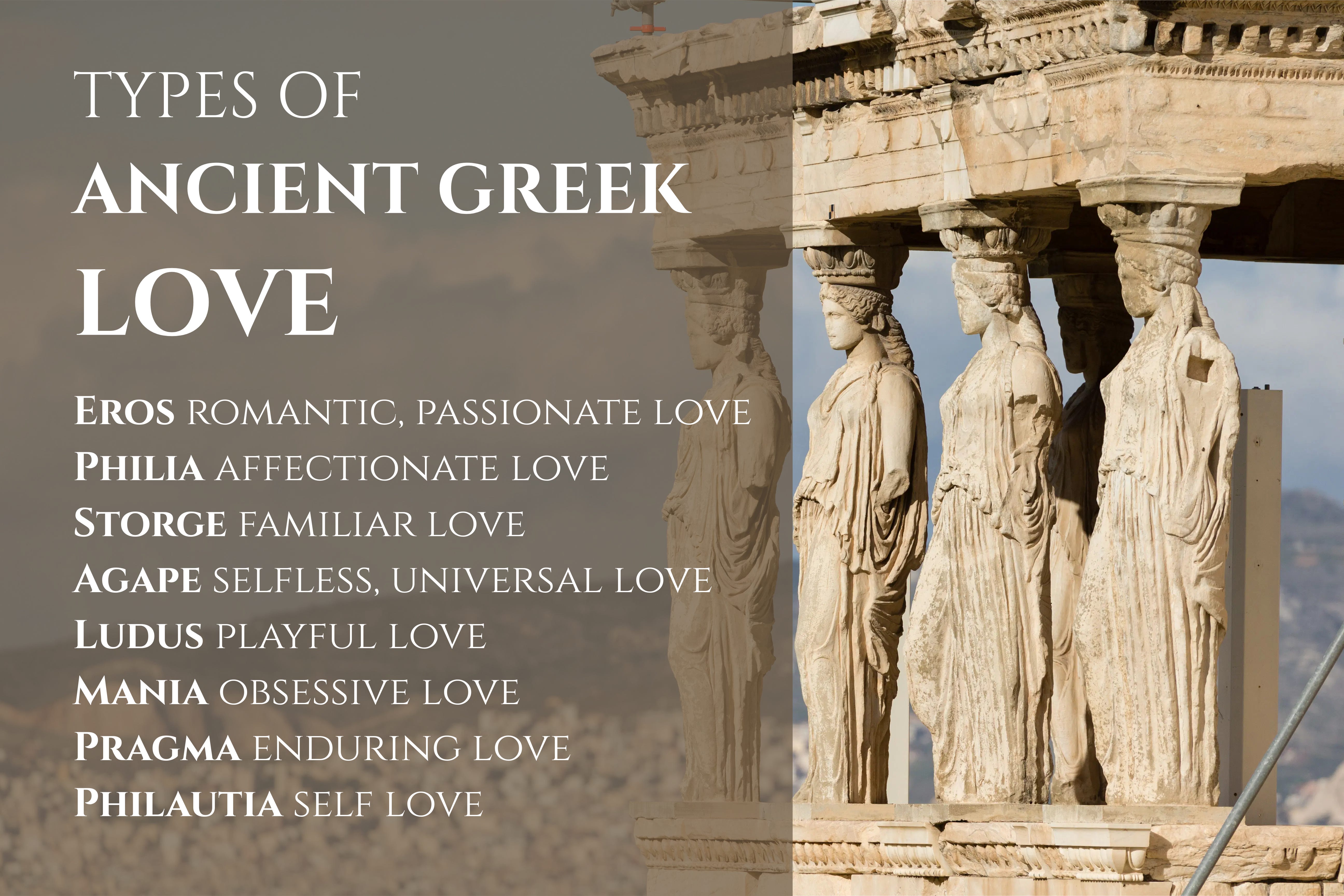
Eros
They called Eros — the love we're most familiar with — the passionate, erotic love driven by desire and attraction. I will go so far as to say that today we are very, very confused between love and lust. Most people won't even be able to entertain this thought without accepting it as an apparent truth based on real world observation.
“Don’t confuse lust for love. Lust is momentary. Love is eternal.”
The older I get, the more aware I become... the more I see Eros as lust. But it's easy to see why we confuse it for love.
What's not an easy connection to make is how lower-chakra desire is not Love with a capital “L”. I’ve seen this energy transmute in my own life and I still bounce back and forth between lower-chakra sexual craving and higher forms of love.
This may be the energy that brings people together initially — it might be the tinder that lights the fire — but it doesn’t keep it lit. And if your love is solely based on this sensation of lust, you’ll be disappointed as time goes on.
This energy can be transmuted, but it takes conscious work.
Philia
You know the city of Philadelphia, the city of brotherly love. The Greeks called this “brotherly love”, which has camaraderie at its core, Philia — a love between equals built on trust, loyalty, and mutual respect.
This is where we get the name Ophelia! (Back to the song.)
“Having even one true friend in a lifetime is a rare gift.”
The city of Philadelphia goes back to the ancient mystery schools of Greece during the time of Pythagoras and Orpheus before him — who was the one that healed with light. (Yes, that’s the same Orpheus that inspired the name “Morpheus” in the film, The Matrix. And by this point I’m guessing you see the connection between “Trinity” and the Holy Trinity, too.)
In Ancient Greece, during the time of Orpheus, even before the time of Pythagoras, “Know Thyself” was inscribed at the Temple of Apollo in Delphi.
Know Thyself
Gnōthi Seauton (Greek)
Temet Nosce (Latin)

The Oracle at Delphi — also known as the Pythia — was the high priestess of the Temple of Apollo, and one of the most powerful spiritual figures in the Ancient Greek world.
In the film, The Matrix, when Neo, an anagram of the One (and Eon meaning age), goes to see the Oracle (a clear nod to the Oracle at Delphi), above the entrance to her kitchen temple was inscribed: Temet Nosce.
Know Thyself.
Storge
Most people can relate to this type of love — it feels familiar because it is familial. Storge is the unconditional, familial love that flows like honey between kin. This is where we get the term 'kindred spirit' from — and while it doesn’t have literal Greek origins, it shares the same emotional root: a sense of familial connection, resonance, and deep familiarity.
Familial love is not obligatory — you don't love them just because they are blood relatives or family — you love them because the feeling of storge is naturally present. Today, this type of love has been reduced to love of family out of obligation when this couldn't be further from the true sentiment of the term.
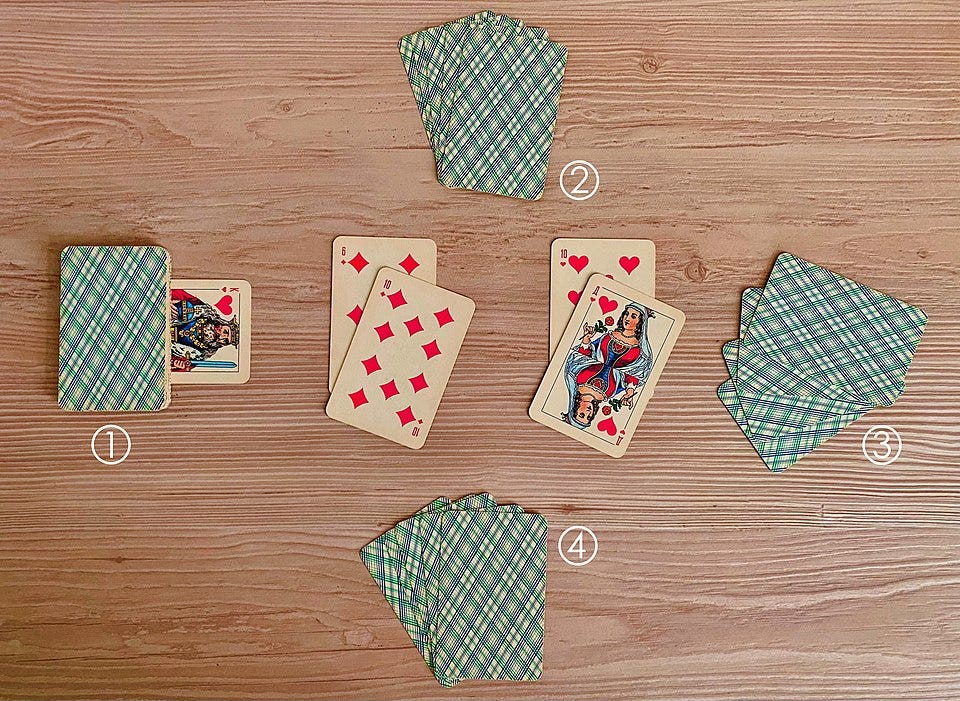
I had a deep love for my grandmother and when she passed, I was ready for her to go. Whenever I reflect back on all the time I spent with her during her last year with lung cancer, I am filled with joy because nothing was missing. That time we spent together walking, talking, playing checkers and Durak — a Russian card-game — was precious.
Agape
Agape love is one of my personal favorites. It's used in humanity and leadership. Agape is the selfless, universal love that gives without expecting anything in return.
“The best way to find yourself is to lose yourself in the service of others.” —Mahatma Gandhi
For about a year, I volunteered at an animal sanctuary working with kittens one day a week. I would drive 45 mins to clean their space, feed and play with them. It was the gift that kept giving and I relished my time with them.
Agape love is but one of the forms of love Stephen Hawking’s wife bestowed upon him.
Ludus
This is playful love. Ludus is a playful, flirtatious love full of teasing, laughter, and lightness.
“Love is composed of a single soul inhabiting two bodies." —Aristotle
And I'll add: "But it starts with a wink and a grin."
My girlfriend and I are always playing, laughing, teasing and joking with each other. It's magical. It’s never mean or in sarcasm, it’s always rooted in care and genuine fondness of one another.
Mania
This one is pretty self-explanatory. Mania is a maniacal love bordering on obsession — it's not love — it's infatuation and obsession. But to the Ancient Greeks this type of love-sick obsession was a form of love. It makes sense when you also consider it from the perspective and context of the last form of love addressed in this piece which is beyond questionable.
I’m just going to say it: mania is obsession — it’s not love.
The ancient mystery schools knew this.
Pragma
Pragma is rooted in pragmatism which is where the word comes from. It's a steady, enduring love built on commitment and long-term effort. Pragma gives us the word pragmatic — going back to the Victorian times of marrying for security and stability when the spirit of pragma was completely inverted. Marrying out of fear is not pragma — that would be its neurosis.
“Love is not about how many days, months, or years you’ve been together. Love is about how much you love each other every single day.”
I have seen pragma emerge in my last two spiritual relationships. It’s a mature and wise love — a truly beautiful thing.
Love Breathes
Sometimes its deep, other times it's shallow — but it breathes. It's always breathing.

I have known all these forms of love and I have experienced the transformation of them all too. Love, in all its forms, is not rigid, set and fixed. Love never binds, or suffocates, it liberates and frees. Love grows like a flower, and every flower has its season. Some flowers bloom and blossom multiple times a year; others may bloom once and not blossom again for a while. Love moves, changes, breathes and evolves. There is no such thing as static love — a love that's not evolving is like the breath that's stopped — and died having turned rigid.
Staying together is not always love either. Sometimes, loves separates because that's what heals.
Think of how many couples claim to be in love and when it comes time to get a divorce — for any host of reasons — all reason goes out the window. So many forget the “love” that was there and instead replace it with rancor.
It’s actually quite crazy. It’s literally insane.
This is not love. Love forgives. Love liberates. Love can hold the pain and grief. Love wants the best.
Love breathes.
Philautia
Philautia is not to be confused with fellatio. They are not the same thing. One is Greek, the other Latin. One is full of a healthy love of Self, the other is more like a vacuum. But besides bearing phonetic similarities, we're assured they bear no shared root connections.
Philautia is a type of self-love which can be either healthy self-respect or harmful self-obsession, whereas mania is focused outwardly on another. The latter manifestation of philautia is based on a neurosis which produces narcissism, hence the myth of Narcissus — who, unable to look away from his own reflection in the water, fell in love with an image of a persona — the mask that could never love him back.
This is the Ego seeking to validate itself.
The Ego's desire for love is unquenchable.
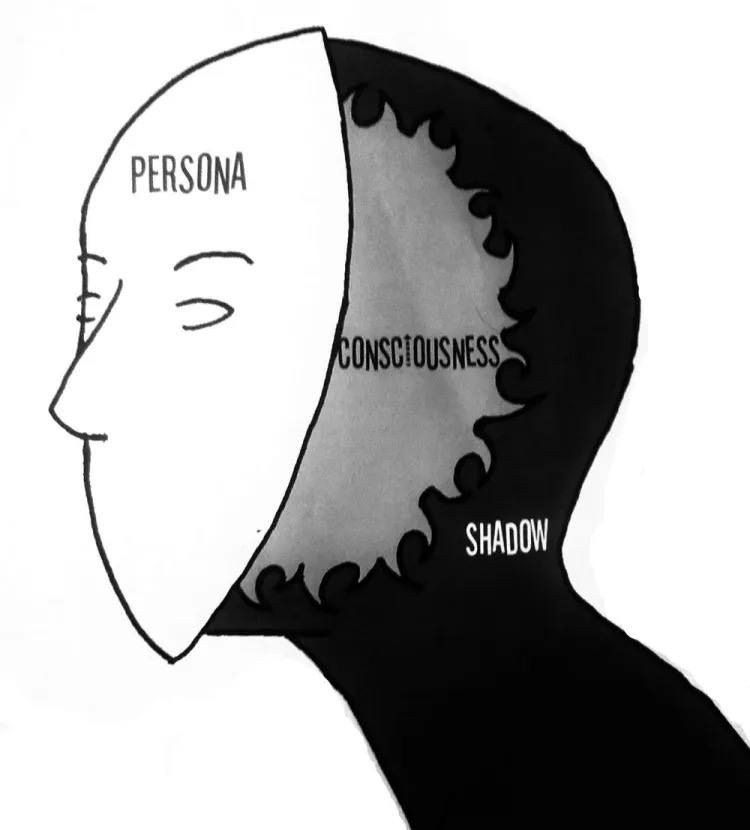
But love can't be found outside — it's an inside job.
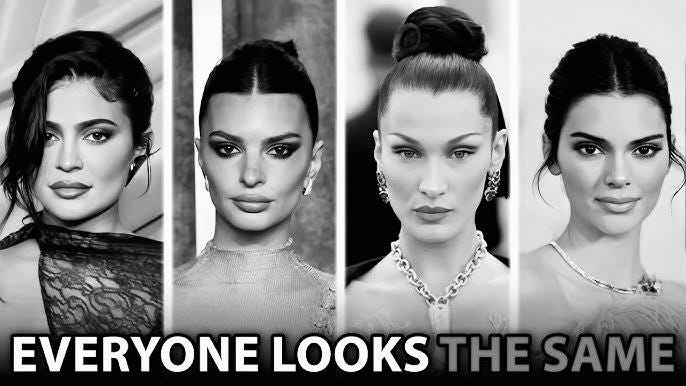
Slim Shady spoke with precocious prescience.
But this homogenization is really not different from past cultures and societies. Men in wigs in Victorian society or bald men during the time of ancient Egypt.
"Ancient Egyptian women strived to be thin with pert breasts, while men with broad shoulders tapering down to flat stomachs were considered handsome. Some things never change."
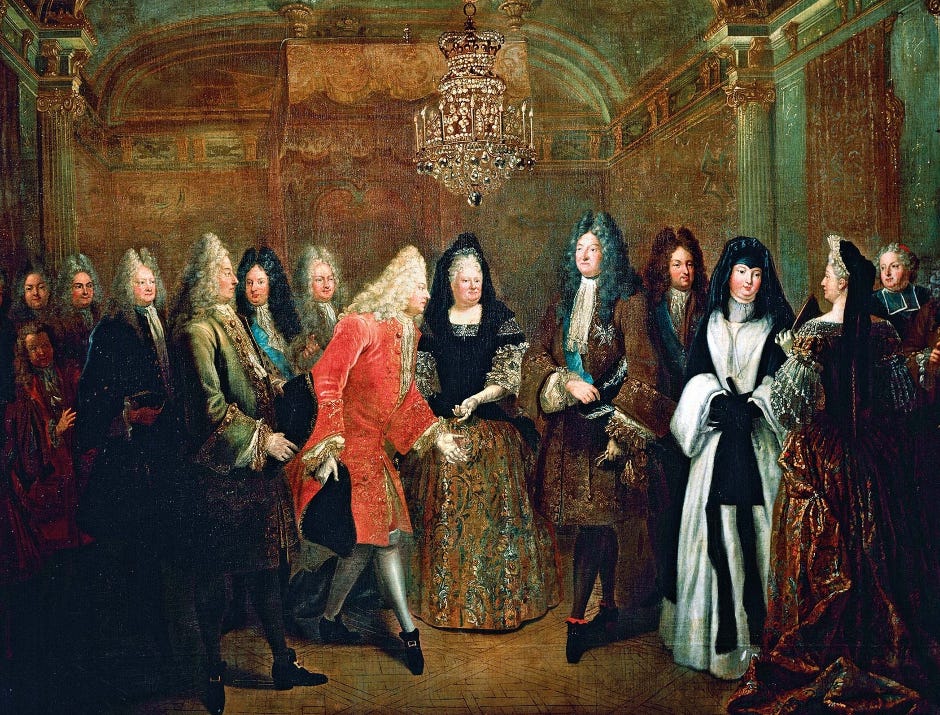
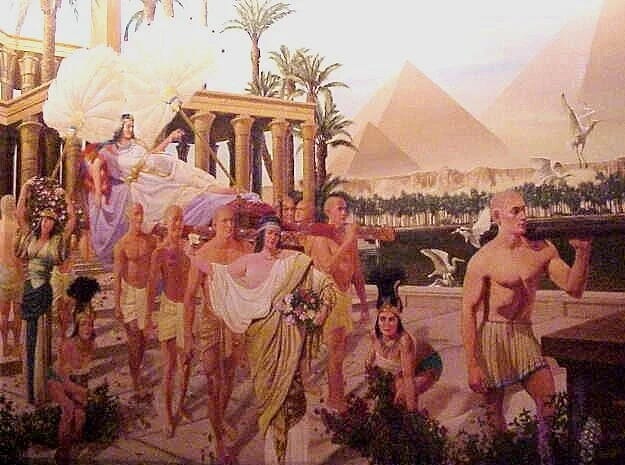
This is what we are seeing now with AI and have been seeing with social media as people use tech and filters to compare their physical self with fake AI-generated versions. Not to mention all the plastic surgery which makes everyone look identical.
So while AI is sterilizing people's authentic human voices, plastic surgery is homogenizing everyone's outward appearance.
And it's all being normalized. You gotta love it.
What about the Philía of Paidós?
Don't know what that means yet? Let's spell it in clear English — the philia of pedos — that would be pedophilia related to pederasty.
Do those words scare you? They’re just words. Maybe what they mean should scare you more than the words themselves.
It breaks down like this:
Paidós means child which is also the root of paideia meaning education or upbringing, and the origin for such commonly used words as pediatrician and pedagogy — you know — words you're familiar with already. The one's that aren't so scary.
Philía, you should already remember, remember? It means brotherly love... as in Philadelphia. Or take philosophy — the love of wisdom where we have Philo and Sophia — where Sophia mean wisdom in Ancient Greek.
But bring them together — PaidósPhilía and it means love of children — and not the platonic agape kind, right?!
Pedophilia goes back to Ancient Greece too — this was a popular practice which the Ancient Romans also embraced. And it’s said that not everyone practiced it but certainly over 10% of Greco-Roman societies, especially at the elite levels.
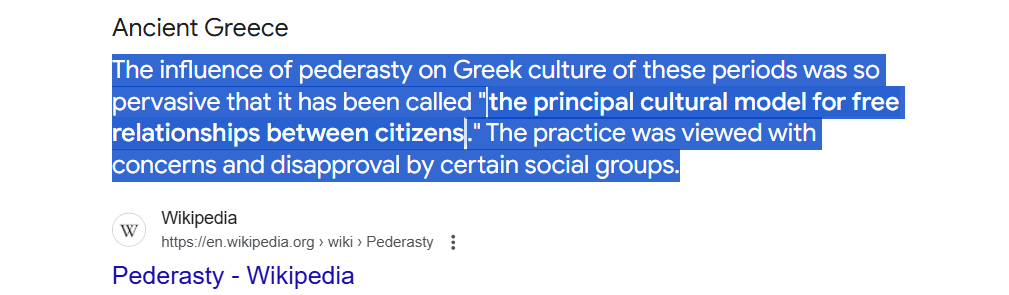
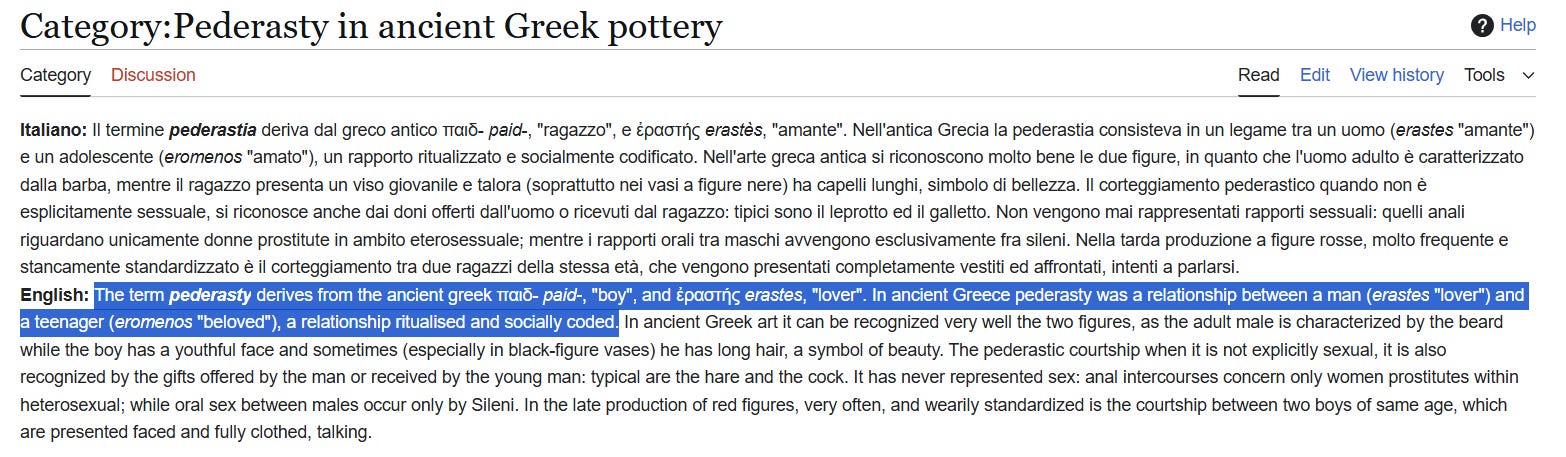
Here is a link to the above image.
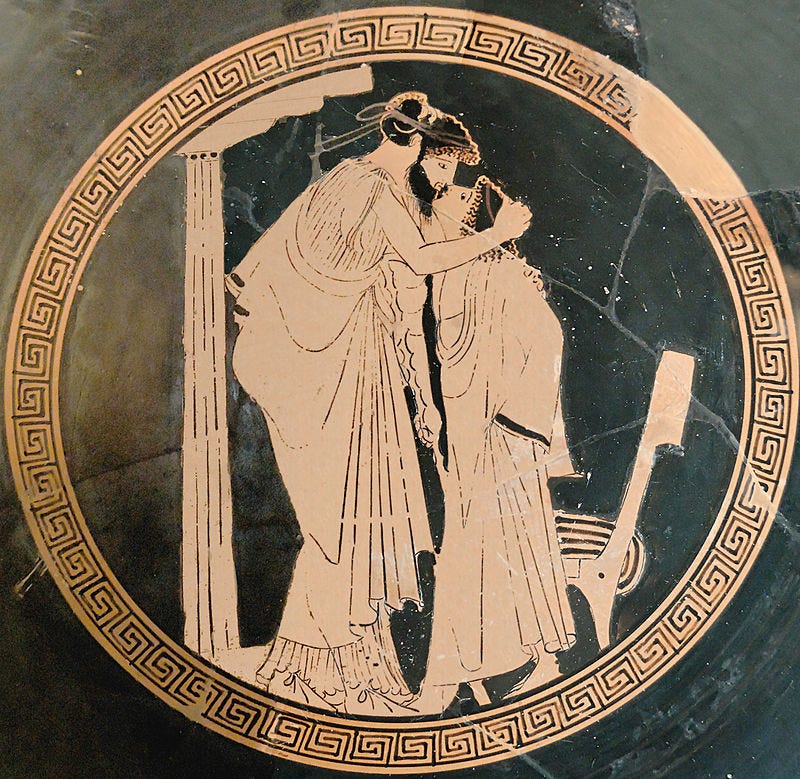
Scary, taboo, I know. But it shouldn't be taboo to talk about because it's happening right now — you simply cannot bury your head in the sand, indefinitely, like it's not.
Here is a movie, called Sound of Freedom, endorsed by Mel Gibson, regardless of what you think of the man. You can watch the preview here.
It’s seems not much has changed.
The problem is systemic.
It’s way above the level of the presidency.
I will remind people that Virginia Giuffre, who was paid $12M by Prince Andrew in 2022, was recruited by Jeffrey Epstein from Trump’s Mar-a-Lago spa when she was just 16 years old. The official narrative is that she committed suicide this past April leaving behind three teenage children.
Do you see why understanding language, roots, and origins of words is important? It means you speak a language whereby you can't be deceived by anyone, anytime.
It means no one can pull the wool over your eyes anymore.
I had no intention of writing about pedophilia again! But as I was writing about the various forms of Greek Love it dawned on me what they used to practice. Again, it's not new to me but the insight that it was also systemic became that much more sobering.
And it’s been an under the radar practice for a long time, but it’s finally coming to the surface with stories like Anneke Lucas, and so many others.
Sorry for this weird transition — but we can’t escape the dark only by focusing on the light. The dark must be seen and integrated — outside and inside ourselves too.
Closing Thoughts
Love is so much more than what we think it is. It’s not a thought. It’s an experience and a feeling. A sensation, a look, a touch, a hug, a kind word, a moment of silence, a space held in support of another. Love has boundaries and love is limitless — it’s a paradox. It’s not rigid, it flows like an endless spring.
Take a moment to truly reflect on the various forms of love that you’ve experienced in your life. Reflect on how love has emerged, transformed and re-emerged as something new altogether.
And be grateful you have known love.
Till next time.
MLS 🖤
P.S. If you want two more beautiful movies about the power of selfless love, I recommend Life is Beautiful and The Curious Case of Benjamin Button.
Next Steps and Making a Gift
I am an Agape Leadership Coach, a Polymath Healer and a Soul Strategist.
My heart-centric work focused on the classics: Christ, Buddha, Lao Tzu and Rumi.
If my work has inspired or supported you, please feel free to make a donation in the generous spirit of Dana. Your offering is received with gratitude. Give whatever amount feels right in your heart. 🙏🖤
You can pledge a gift here.
And if you’re looking for a premium ghostwriter, please reach out to me: unsaidunderside@gmail.com.
Thank you for supporting the collective expansion of human consciousness.
We are truly in this together… for our Souls.
This was a sweeping, thought-provoking journey through love in all its forms, from the intimate to the uncomfortable truths we’d rather not face. I especially appreciate how you tied the Greek concepts back to lived experience. “Love breathes” is going to stick with me.
This writing is a winner! 🤍